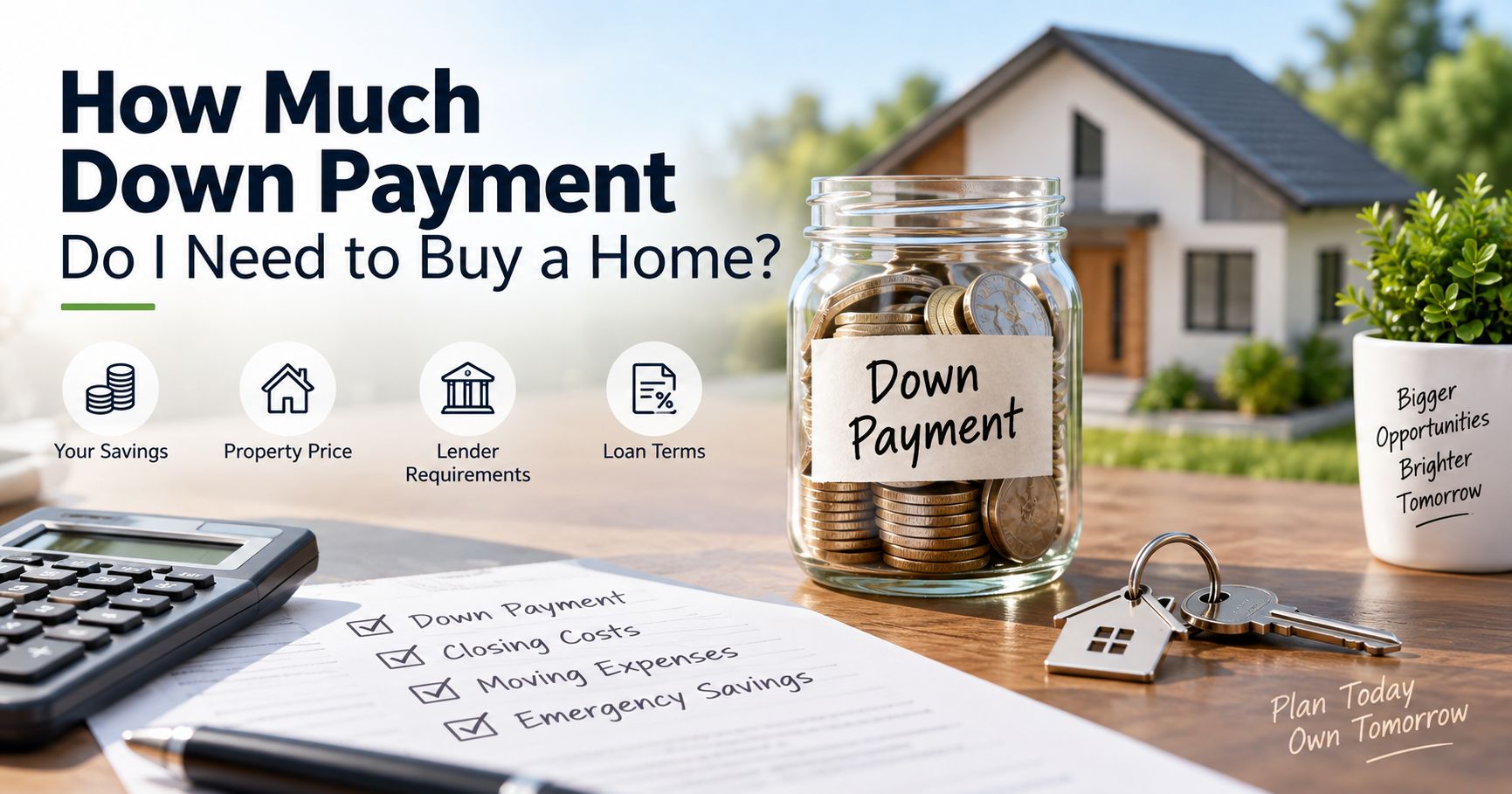
How Much Down Payment Do I Need to Buy a Home?.
Learn how much down payment you may need to buy a home, what affects the required amount and how your down payment can influence your mortgage, monthly payment and savings..
The down payment you need depends on the country, lender, mortgage type, property value and your financial situation. There is no single percentage that applies to every home buyer.
A larger down payment generally means borrowing less, but using too much of your savings can leave you with little money for closing costs, repairs and emergencies.
What Is a Down Payment?
A down payment is the portion of the property price that you pay using your own money rather than financing through a mortgage or home loan.
For example, if a property costs 500,000 and you contribute 100,000 yourself:
Down Payment = 100,000
The remaining amount that may need financing is:
500,000 - 100,000 = 400,000
In this example, the down payment represents 20% of the property price.
How Is Down Payment Percentage Calculated?
A simple formula is:
Down Payment Percentage = Down Payment ÷ Property Price × 100
For example:
Property price: 1,000,000
Down payment: 200,000
The calculation would be:
200,000 ÷ 1,000,000 × 100 = 20%
What Determines the Required Down Payment?
The amount required can depend on several factors, including:
Country and local mortgage rules
Mortgage product
Lender requirements
Property type
Property value
Borrower income
Creditworthiness
Loan-to-value ratio
Because lending rules vary significantly, buyers should confirm the requirements that apply to their specific mortgage.
Use the Down Payment Calculator to estimate the upfront contribution for different property prices and deposit percentages, then use the Mortgage / EMI Calculator to understand how the remaining loan may affect monthly payments.
How Does Down Payment Affect Your Mortgage?
A larger down payment reduces the amount you need to borrow.
This may affect:
Mortgage amount
Monthly payment
Loan-to-value ratio
Total interest cost
Financing eligibility
Certain mortgage fees or insurance requirements
However, the exact effect depends on the lender and mortgage structure.
What Is Loan-to-Value Ratio?
Loan-to-value, or LTV, compares the mortgage amount with the property's value.
For example:
Property value: 1,000,000
Mortgage: 800,000
The LTV would be:
800,000 ÷ 1,000,000 × 100 = 80%
This means the buyer is contributing the remaining 20% through their own funds.
Is a Bigger Down Payment Always Better?
Not necessarily.
A larger down payment can reduce borrowing, but putting too much cash into the purchase may leave you without enough financial flexibility.
Before increasing your down payment, consider whether you also need money for:
Closing costs
Registration or transfer charges
Legal expenses
Moving costs
Furniture
Renovation
Repairs
Emergency savings
The right balance depends on your overall financial position.
Do Not Forget Purchase Costs
Your down payment is not necessarily the only cash you need before buying a property.
Depending on the transaction, additional costs may include:
Mortgage fees
Legal fees
Registration costs
Property taxes or transfer charges
Inspection costs
Insurance
Moving expenses
Budget for these separately rather than assuming all your available savings can go toward the down payment.
Keep an Emergency Reserve
Buying a property can create unexpected expenses soon after moving in.
You may need funds for:
Appliance replacement
Plumbing repairs
Electrical work
Heating problems
Maintenance
Furniture
Unexpected household expenses
Keeping some savings available after the purchase can provide greater financial flexibility.
Should I Wait to Save a Larger Down Payment?
That depends on your circumstances.
Saving more may reduce your future mortgage amount, but waiting can also mean continuing to rent while property prices, mortgage rates and personal circumstances change.
Rather than focusing only on reaching a particular percentage, compare:
Current savings
Mortgage options
Monthly affordability
Purchase costs
Emergency reserve
Local housing conditions
The Loan-to-Value (LTV) Calculator can help explain the relationship between the mortgage amount and property value, while the Property Purchase Cost Planner helps account for expenses beyond the down payment.
The Bottom Line
The right down payment is not simply the largest amount you can afford to put into the property.
It should balance mortgage affordability with the need to keep enough savings for transaction costs, maintenance and unexpected expenses.
Always check the minimum requirements of the lender and mortgage product you plan to use.
Important Information
Down payment requirements, mortgage rules and financing conditions vary between countries, lenders and individual borrowers.
Prozameen provides this Q&A for general informational and educational purposes only.
The down payment you need depends on the country, lender, mortgage type, property value and your financial situation. There is no single percentage that applies to every home buyer.
A larger down payment generally means borrowing less, but using too much of your savings can leave you with little money for closing costs, repairs and emergencies.
What Is a Down Payment?
A down payment is the portion of the property price that you pay using your own money rather than financing through a mortgage or home loan.
For example, if a property costs 500,000 and you contribute 100,000 yourself:
Down Payment = 100,000
The remaining amount that may need financing is:
500,000 - 100,000 = 400,000
In this example, the down payment represents 20% of the property price.
How Is Down Payment Percentage Calculated?
A simple formula is:
Down Payment Percentage = Down Payment ÷ Property Price × 100
For example:
- Property price: 1,000,000
- Down payment: 200,000
The calculation would be:
200,000 ÷ 1,000,000 × 100 = 20%
What Determines the Required Down Payment?
The amount required can depend on several factors, including:
- Country and local mortgage rules
- Mortgage product
- Lender requirements
- Property type
- Property value
- Borrower income
- Creditworthiness
- Loan-to-value ratio
Because lending rules vary significantly, buyers should confirm the requirements that apply to their specific mortgage.
Use the Down Payment Calculator to estimate the upfront contribution for different property prices and deposit percentages, then use the Mortgage / EMI Calculator to understand how the remaining loan may affect monthly payments.
How Does Down Payment Affect Your Mortgage?
A larger down payment reduces the amount you need to borrow.
This may affect:
- Mortgage amount
- Monthly payment
- Loan-to-value ratio
- Total interest cost
- Financing eligibility
- Certain mortgage fees or insurance requirements
However, the exact effect depends on the lender and mortgage structure.
What Is Loan-to-Value Ratio?
Loan-to-value, or LTV, compares the mortgage amount with the property's value.
For example:
- Property value: 1,000,000
- Mortgage: 800,000
The LTV would be:
800,000 ÷ 1,000,000 × 100 = 80%
This means the buyer is contributing the remaining 20% through their own funds.
Is a Bigger Down Payment Always Better?
Not necessarily.
A larger down payment can reduce borrowing, but putting too much cash into the purchase may leave you without enough financial flexibility.
Before increasing your down payment, consider whether you also need money for:
- Closing costs
- Registration or transfer charges
- Legal expenses
- Moving costs
- Furniture
- Renovation
- Repairs
- Emergency savings
The right balance depends on your overall financial position.
Do Not Forget Purchase Costs
Your down payment is not necessarily the only cash you need before buying a property.
Depending on the transaction, additional costs may include:
- Mortgage fees
- Legal fees
- Registration costs
- Property taxes or transfer charges
- Inspection costs
- Insurance
- Moving expenses
Budget for these separately rather than assuming all your available savings can go toward the down payment.
Keep an Emergency Reserve
Buying a property can create unexpected expenses soon after moving in.
You may need funds for:
- Appliance replacement
- Plumbing repairs
- Electrical work
- Heating problems
- Maintenance
- Furniture
- Unexpected household expenses
Keeping some savings available after the purchase can provide greater financial flexibility.
Should I Wait to Save a Larger Down Payment?
That depends on your circumstances.
Saving more may reduce your future mortgage amount, but waiting can also mean continuing to rent while property prices, mortgage rates and personal circumstances change.
Rather than focusing only on reaching a particular percentage, compare:
- Current savings
- Mortgage options
- Monthly affordability
- Purchase costs
- Emergency reserve
- Local housing conditions
The Loan-to-Value (LTV) Calculator can help explain the relationship between the mortgage amount and property value, while the Property Purchase Cost Planner helps account for expenses beyond the down payment.
The Bottom Line
The right down payment is not simply the largest amount you can afford to put into the property.
It should balance mortgage affordability with the need to keep enough savings for transaction costs, maintenance and unexpected expenses.
Always check the minimum requirements of the lender and mortgage product you plan to use.
Important Information
Down payment requirements, mortgage rules and financing conditions vary between countries, lenders and individual borrowers.
Prozameen provides this Q&A for general informational and educational purposes only.