
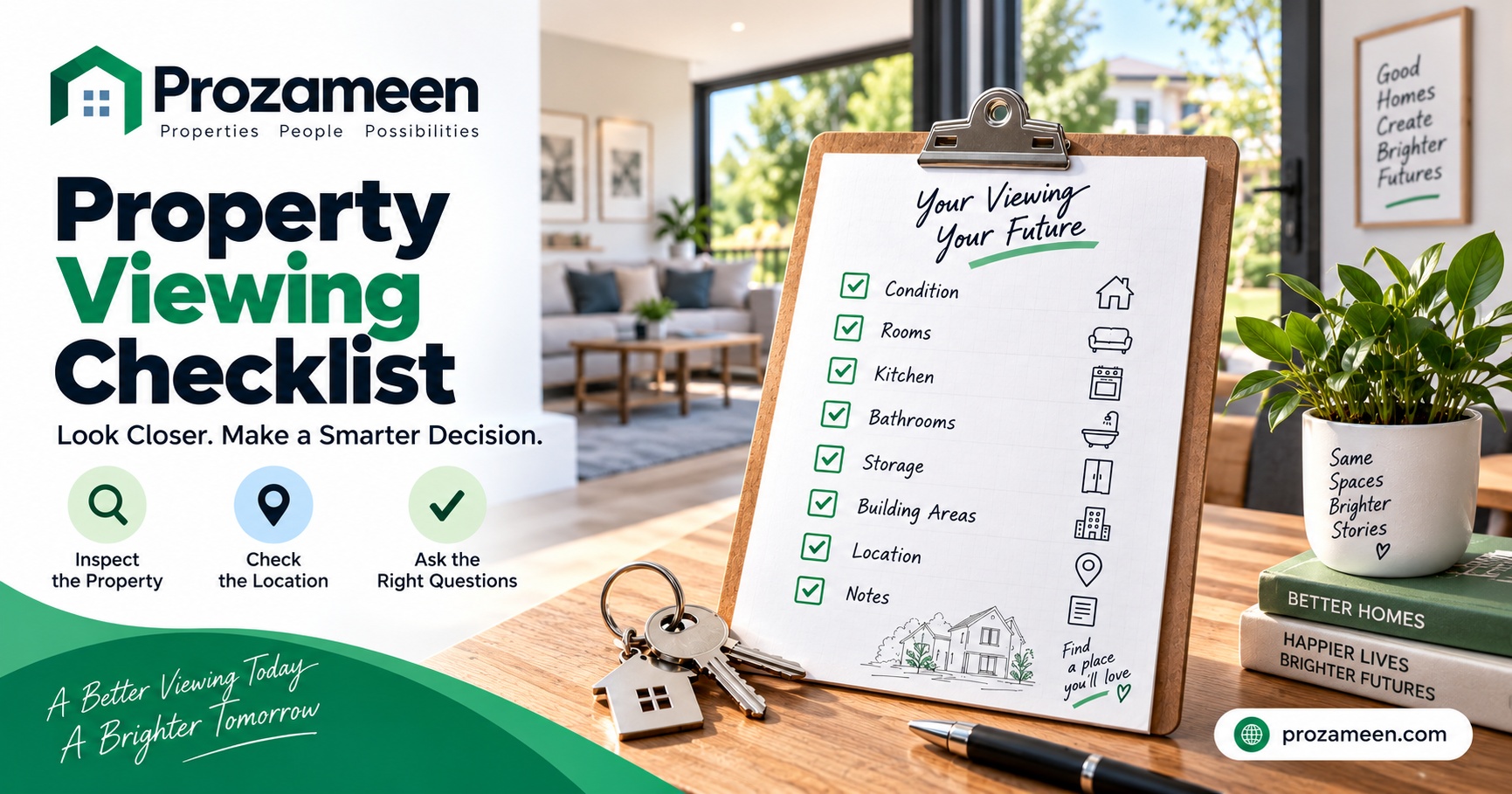
Checklist
A property viewing is your opportunity to look beyond photographs and marketing descriptions and understand what the property is really like.
The Prozameen Property Viewing Checklist helps buyers, renters and property investors examine the most important areas of a home before deciding whether it deserves further consideration.
A property viewing should evaluate more than appearance. Use the Property Due Diligence Guide to understand the checks that should follow a viewing, and consult the Property Valuation Guide for Buyers & Investors when comparing the asking price with market evidence.
If you are viewing several properties, the Property Comparison Tool can help organize price, rental income, expenses and other key differences. Where repairs or improvements may be required, use the Property Renovation Budget Planner to estimate potential costs before making a decision.
What Should You Check During a Property Viewing?
A good property viewing should cover more than the appearance of the rooms.
Important areas include:
- Overall property condition
- Walls, ceilings and floors
- Windows and doors
- Plumbing and water pressure
- Electricity and lighting
- Heating and ventilation
- Kitchen and bathrooms
- Storage and layout
- Building condition
- Noise and natural light
- Parking and access
- Surrounding neighbourhood
Taking a structured approach can make it easier to compare different properties later.
Buyers concerned about the asking price can also read How Do I Know If a Property Is Overpriced?
Look Beyond Decoration
Furniture, lighting and decoration can make a property attractive during a viewing, but they may also distract from important details.
Pay attention to the condition of the property itself, including visible cracks, moisture, damaged flooring, poorly closing windows, unusual smells and signs of unfinished repairs.
Check for Dampness and Moisture
Look carefully around windows, ceilings, bathrooms, kitchens and exterior-facing walls.
Signs such as water stains, peeling paint, mould, condensation or musty smells may deserve further investigation.
Visible signs do not necessarily reveal the full condition of a property, so professional inspection may be appropriate where concerns exist.
Test Important Features
Where permitted, test basic features such as:
- Taps and water pressure
- Toilets
- Windows and doors
- Light switches
- Heating or cooling
- Built-in appliances
Ask questions if something cannot be tested during the viewing.
Consider the Layout and Space
Think about how the property would work for everyday living.
Consider room sizes, storage, natural light, furniture placement and whether the layout suits your current and future needs.
Research the Building and Surroundings
The property itself is only part of the decision.
Consider the condition of shared areas, parking, entrances, lifts where applicable, nearby traffic, public transport, shops, schools and future development in the area.
Visiting the neighbourhood at a different time of day can provide additional perspective.
Ask Questions During the Viewing
Do not hesitate to ask about the property’s age, renovation history, previous damage, maintenance, service charges and anything else that may affect ownership or occupancy.
For a property purchase, important information should be independently verified as part of your due diligence.
Take Notes and Photos
If permitted, take photographs and make notes during or immediately after the viewing.
Recording your observations can be especially useful when comparing several properties.
Important Information
A property viewing is not a substitute for a professional property inspection or technical survey.
Some structural, electrical, plumbing, moisture or building-related problems may not be visible during a normal viewing.
- First Impression — Check the overall condition of the property and building
- Walls & Ceilings — Look for cracks, stains, peeling paint or visible damage
- Moisture — Check for dampness, mould, condensation or unusual smells
- Floors — Inspect flooring and tiles for damage, movement or uneven areas
- Windows — Open and close windows and check frames, locks and seals
- Doors — Check internal and exterior doors, handles and locks
- Plumbing — Turn on taps and check water pressure where permitted
- Bathrooms — Check toilets, showers, drainage and visible plumbing
- Kitchen — Inspect cabinets, worktops, sink and included appliances
- Electricity — Check accessible light switches, outlets and lighting where practical
- Heating — Ask about and check the heating system where possible
- Ventilation — Check ventilation in kitchens, bathrooms and living areas
- Natural Light — Consider sunlight and natural light in the main rooms
- Noise — Listen for traffic, neighbours, construction or other noticeable noise
- Layout — Consider whether the room sizes and layout suit your needs
- Storage — Check wardrobes, cupboards, storage rooms and other storage space
- Balcony & Outdoor Space — Inspect balconies, terraces or gardens where applicable
- Building Areas — Check entrances, hallways, lifts and shared areas where applicable
- Parking — Confirm parking availability and access where relevant
- Maintenance — Ask about recent repairs, renovations and known maintenance issues
- Running Costs — Ask about service charges, utilities or other recurring costs
- Location — Check transport, shops, schools and everyday services nearby
- Neighbourhood — Consider traffic, noise, surroundings and nearby development
- Viewing Record — Take permitted photos and notes so you can compare properties later