
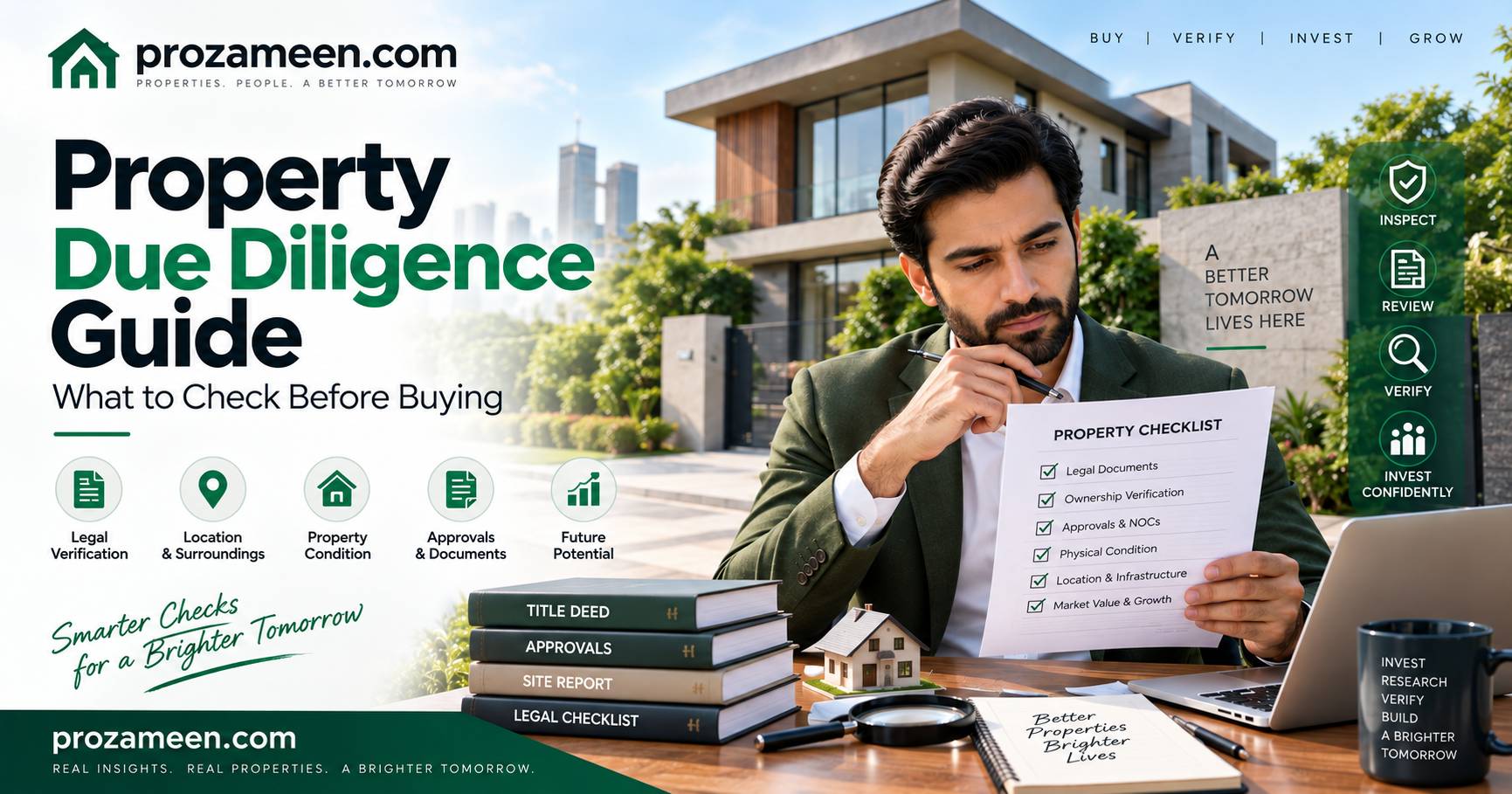
Property Due Diligence Guide: What to Check Before Buying
A property can look perfect during a viewing and still have important financial, legal or maintenance issues that are not immediately visible.
Property due diligence is the process of checking important information about a property before you complete the purchase.
The Prozameen Property Due Diligence Guide helps buyers organize the main checks relating to ownership, property condition, documents, costs, location and potential risks before making a major property decision.
What Is Property Due Diligence?
Property due diligence means researching and verifying the information that could affect your decision to buy a property.
The exact process varies by country, property type and transaction, but it commonly includes:
- Ownership and registration information
- Property condition
- Purchase documents
- Building information
- Financial obligations
- Ongoing ownership costs
- Location research
- Professional inspections where appropriate
The goal is not to find a “perfect” property. It is to understand what you are buying and identify questions that need answers before the purchase is completed.
Check Property Ownership
Before completing a property purchase, confirm that the seller has the legal authority to sell the property.
Depending on the country, relevant checks may include:
- Registered owner
- Property identification
- Ownership type
- Title or registration information
- Rights or restrictions affecting the property
- Outstanding claims or obligations where applicable
Important ownership information should be verified through appropriate official records or qualified professionals.
Review the Property Condition
Look carefully at the physical condition of the property.
Important areas may include:
- Walls and ceilings
- Roof where applicable
- Floors
- Windows and doors
- Plumbing
- Electrical systems
- Heating and cooling
- Ventilation
- Kitchen and bathrooms
- Dampness or mould
- Visible structural concerns
A normal property viewing cannot reveal every technical problem.
Where appropriate, consider an independent professional property inspection or technical assessment.
Review Important Property Documents
Documents can provide information that may not be visible during a property viewing.
Depending on the property and location, review available information relating to:
- Ownership
- Property registration
- Purchase agreement
- Building approvals
- Renovations
- Maintenance
- Shared-property arrangements
- Service charges
- Warranties
- Previous reports
Make sure you understand important documents before signing them.
Understand the Total Cost of Buying
The advertised property price is not always the total amount you will spend.
Additional costs may include:
- Down payment
- Mortgage or financing fees
- Legal costs
- Registration or transfer charges
- Taxes
- Property inspection costs
- Insurance
- Repairs
- Renovation
- Moving costs
Understanding the total purchase cost can help you create a more realistic property budget.
Check Ongoing Ownership Costs
Property expenses continue after the purchase.
Research potential ongoing costs such as:
- Mortgage payments
- Service or community charges
- Property taxes where applicable
- Insurance
- Utilities
- Maintenance
- Repairs
- Parking fees
- Building charges
For apartments and managed properties, review available information about recurring fees and planned maintenance.
Research the Location
Due diligence should include the surrounding area as well as the property itself.
Consider:
- Public transport
- Commuting time
- Shops and services
- Schools where relevant
- Traffic
- Noise
- Parking
- Nearby construction
- Future development
- Local environmental factors where relevant
Where possible, visit the area at different times of the day.
Compare the Property With Similar Homes
Do not evaluate the asking price in isolation.
Compare the property with similar homes based on:
- Location
- Property type
- Size
- Condition
- Age
- Amenities
- Recent comparable transactions where available
Comparisons can help you understand how the property sits within its local market.
Investigate Repairs and Renovations
Ask about major repairs or renovations that have already been completed.
Where relevant, find out:
- What work was completed
- When it was completed
- Who completed the work
- Whether relevant approvals were required
- Whether warranties remain available
Also consider future repairs that may affect your ownership costs.
Review the Purchase Agreement Carefully
Before signing a purchase agreement, understand the important terms.
Review areas such as:
- Purchase price
- Deposit
- Payment schedule
- Completion date
- Included fixtures
- Handover arrangements
- Important conditions
- Responsibilities of each party
Legal requirements differ by country, so professional legal assistance may be appropriate.
Know When to Ask for Professional Help
Some parts of due diligence require specialist knowledge.
Depending on the property, you may need assistance from:
- Property inspectors
- Surveyors
- Engineers
- Lawyers
- Mortgage professionals
- Tax professionals
- Other qualified specialists
Professional assistance can be particularly important when an issue cannot be properly assessed during a normal viewing.
Keep a Record of Your Research
When comparing several properties, it can be difficult to remember every detail.
Keep notes about:
- Property condition
- Documents reviewed
- Questions asked
- Important costs
- Inspection findings
- Outstanding issues
Where permitted, photographs can also help you maintain a clear record.
Important Information
Property due diligence requirements vary by country, transaction and property type.
Prozameen provides this guide for general informational and educational purposes only.
Important property information should be independently verified, and qualified professionals should be consulted where appropriate.