
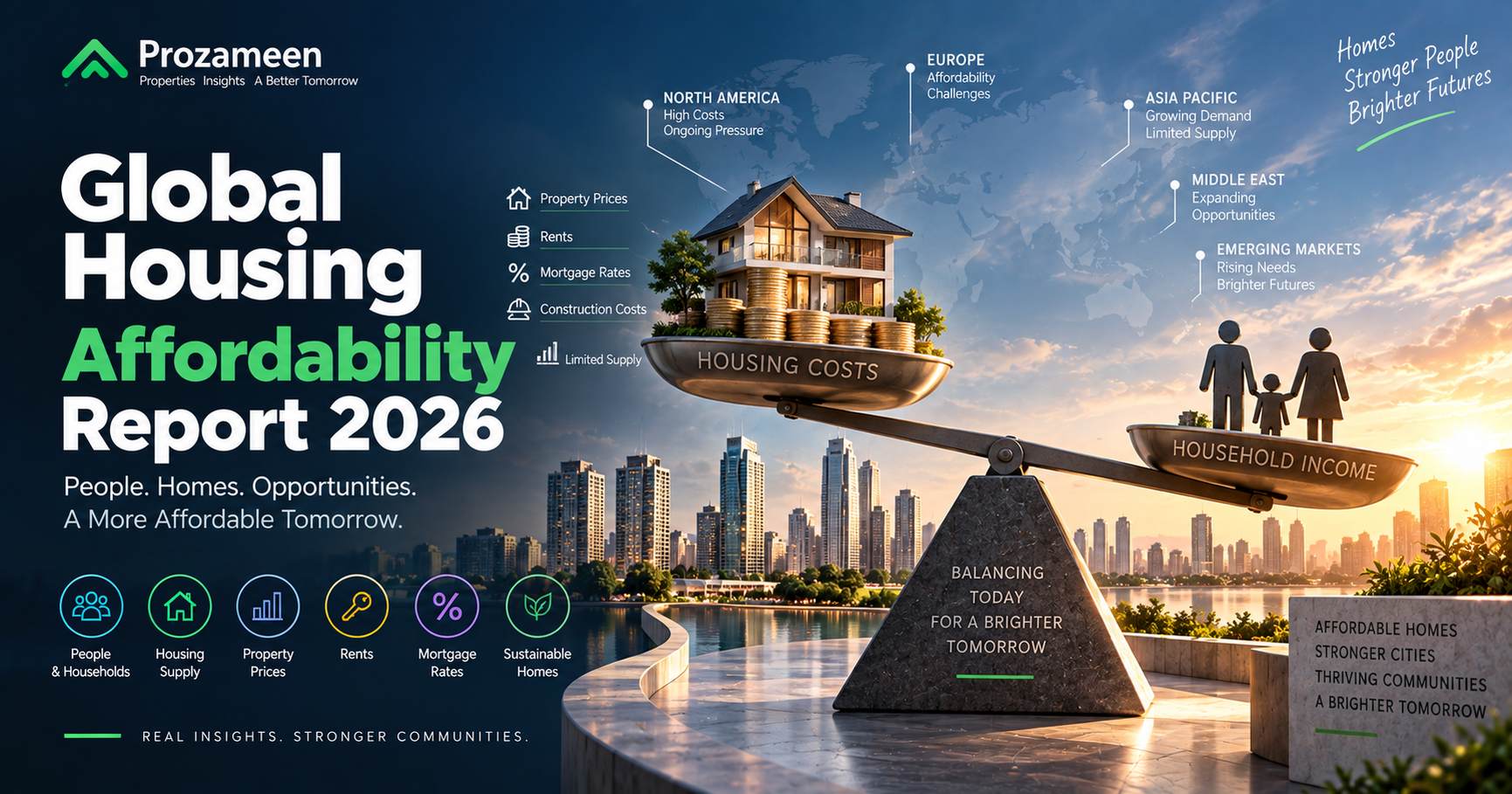
Global Housing Affordability Report 2026
For millions of households, the biggest housing question in 2026 is no longer simply whether property prices are rising or falling.
The more important question is: Can people actually afford to rent or buy a suitable home?
Housing affordability depends on several factors working together, including property prices, rent, household income, mortgage rates, construction costs, housing supply and everyday living expenses.
The Prozameen Global Housing Affordability Report 2026 examines the major forces shaping affordability around the world and explains why falling property prices alone do not necessarily make housing affordable.
Executive Summary
Housing affordability remains one of the most serious challenges facing global property markets in 2026.
Important findings include:
- Housing shortages remain substantial in many regions
- Rent continues to consume a large share of household income
- High construction and financing costs are limiting new supply
- Property prices are moving differently across countries
- Lower-income renters face particularly strong pressure
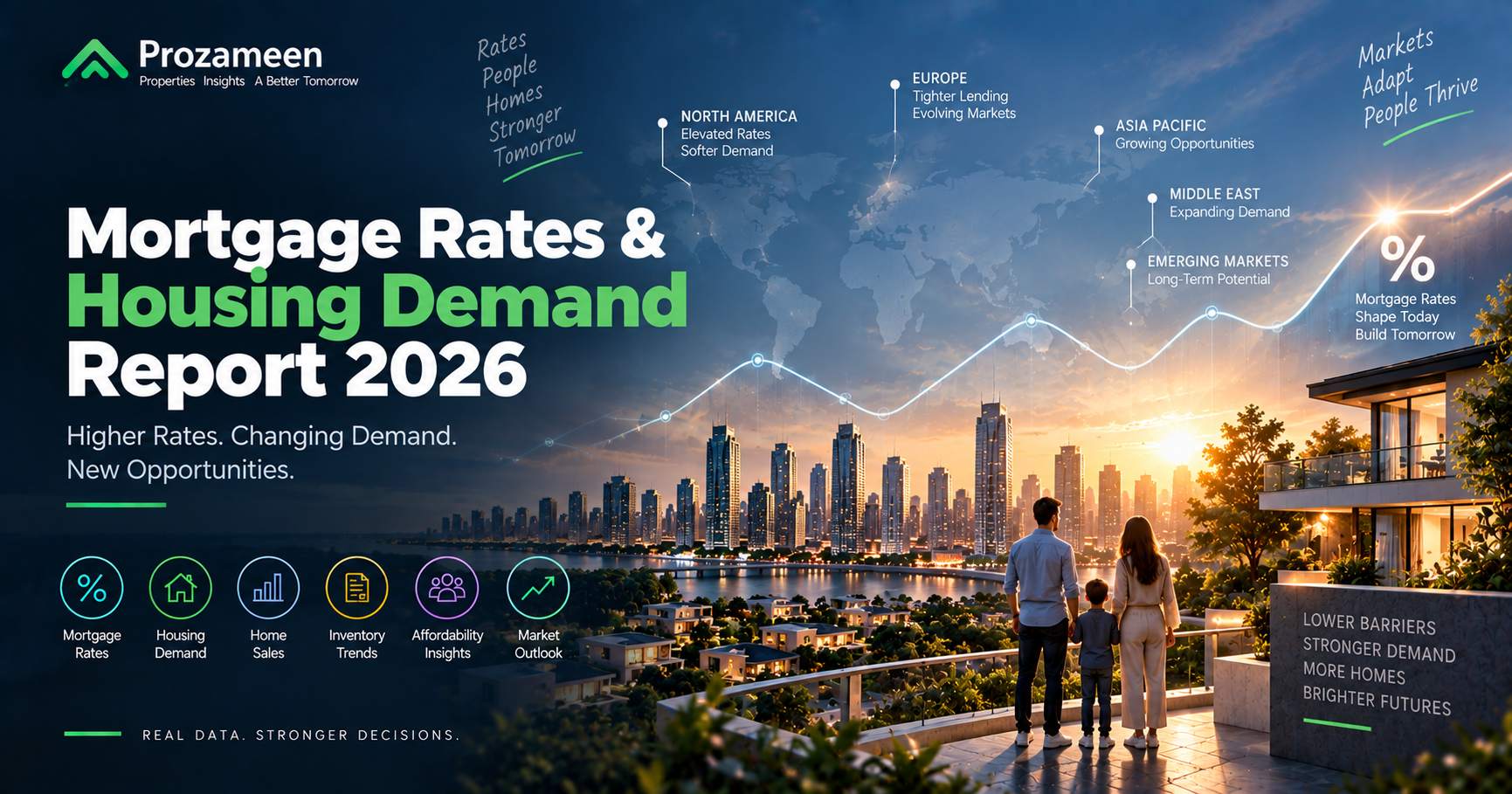
- Mortgage affordability remains sensitive to interest rates
- Large cities often face more severe affordability constraints
- Housing supply is becoming increasingly important to long-term affordability
- Climate resilience and adequate housing quality are becoming part of the affordability discussion
The global affordability problem is therefore not simply a question of whether homes are expensive.
It is increasingly a supply, income, financing and urban-development challenge.
The Scale of the Global Housing Challenge
UN-Habitat's World Cities Report 2026 describes the current housing situation as a global crisis shaped by affordability, displacement, informal housing, climate risks and neighbourhood liveability.
Its latest estimates indicate that up to 3.4 billion people worldwide lack access to adequate housing, including more than 1.1 billion people living in informal settlements and slums.
UN-Habitat also estimates that the global housing deficit increased from approximately 251 million housing units in 2010 to 288 million in 2023.
These figures show that affordability cannot be separated from the broader question of whether enough suitable housing exists.
Housing Costs Are Taking More Household Income
One of the clearest signs of affordability pressure is the share of household income spent on housing.
UN-Habitat's 2026 flagship research estimates that 44% of households globally spend more than 30% of their income on rent, although burdens vary substantially between regions and income groups.
A household spending a very high share of its income on housing may have less money available for:
- Food
- Transport
- Healthcare
- Education
- Savings
- Emergencies
- Retirement
- Other essential expenses
This is why affordability should be evaluated relative to household income rather than property price alone.
Property Prices Are Not Moving in One Direction
Global residential property prices are not experiencing one universal trend in 2026.
According to the Bank for International Settlements, real global house prices declined 1.2% year over year in the first quarter of 2026.
Real prices declined by 0.2% across advanced economies and by 2.0% across emerging market economies, although Europe showed different trends, including a 2.6% increase in the euro area.
This demonstrates why a global headline such as "house prices are falling" can be misleading for individual buyers.
Affordability remains highly local.
Lower Prices Do Not Automatically Mean Affordable Homes
A property can become cheaper while still remaining difficult to afford.
For example, affordability may remain weak when:
- Mortgage rates are high
- Household income grows slowly
- Down payment requirements are large
- Taxes and transaction costs are high
- Housing supply remains limited
- Insurance and maintenance costs increase
Buyers therefore need to consider the total cost of ownership, not only the advertised property price.
Housing Supply Is a Central Problem
Insufficient housing supply is increasingly recognised as a major driver of affordability problems.
The OECD's July 2026 research identifies several factors limiting affordable housing supply across OECD and EU countries:
- Rising construction costs
- Construction labour shortages
- Higher borrowing costs for developers
- Restrictive land-use policies
- Insufficient public investment
- Limited affordable and social housing stock
The OECD concludes that persistent supply-and-demand imbalances have contributed to rising housing costs and increasing financial pressure on households.
This suggests that improving affordability requires more than short-term changes in mortgage rates.
In many markets, increasing housing supply is likely to remain a long-term challenge.
Construction Costs Affect Future Affordability
Building new homes has become more expensive in many markets.
Developers may face higher costs for:
- Land
- Materials
- Labour
- Financing
- Energy
- Infrastructure
- Planning and approvals
When the cost of delivering new housing rises, fewer projects may be financially viable.
This can restrict future housing supply and place additional pressure on both purchase prices and rents.
Renters Face Different Affordability Pressures
Renters and homeowners experience housing affordability differently.
Renters may be affected by:
- Rent increases
- Housing shortages
- Security deposits
- Utility costs
- Limited supply in desirable locations
Home buyers may face:
- Property prices
- Down payments
- Mortgage interest
- Transaction costs
- Insurance
- Maintenance
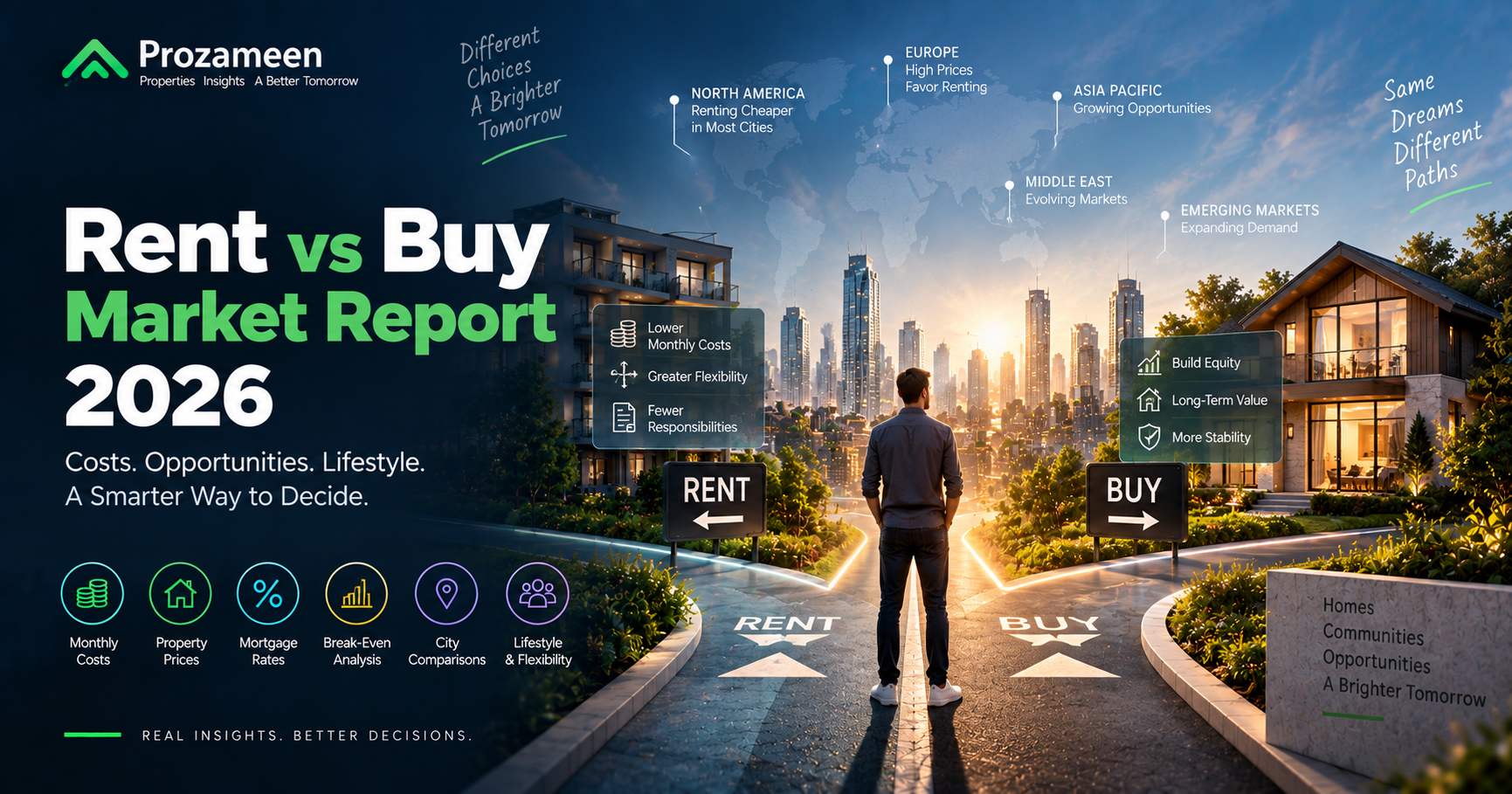
Neither renting nor buying is automatically more affordable.
The answer depends on the local market and household circumstances.
Europe Shows How Uneven the Burden Can Be
Europe provides a useful example of how affordability pressures can affect different groups differently.
An IMF working paper published in August 2026 found that supply-side factors have become increasingly important in explaining house-price pressures in Europe.
The research also found that lower-income urban renters have been disproportionately affected, facing both higher rents and reduced chances of transitioning into home ownership.
This is a European finding rather than a global statistic, but it illustrates why affordability analysis should examine different household groups rather than relying only on national averages.
Affordability Can Affect Where People Live and Work
Housing affordability also has wider economic effects.
The same IMF research estimates that housing affordability constraints may have contributed to around one million foregone residential moves within the EU during the past decade, potentially reducing labour mobility.
When people cannot afford housing near employment opportunities, cities may struggle to attract workers even when jobs are available.
Housing affordability is therefore connected with:
- Employment
- Productivity
- Transport
- Urban development
- Household wealth
- Economic opportunity
First-Time Buyers Face Particular Challenges
First-time buyers often experience affordability differently from existing homeowners.
They may need to manage:
- Saving a down payment
- Mortgage qualification
- Current rent payments
- Transaction costs
- Higher interest rates
- Limited savings
- Competition for entry-level homes
Existing homeowners may already have property equity that can help finance their next purchase.
This difference can make the path to home ownership particularly difficult for younger and first-time buyers.
Mortgage Rates Still Matter
Housing affordability is strongly affected by the cost of borrowing.
Even if the property price remains unchanged, a higher mortgage interest rate can significantly increase monthly payments.
Buyers should therefore consider:
- Property price
- Down payment
- Mortgage amount
- Interest rate
- Loan term
- Monthly payment
- Other ownership costs
Affordability calculations should also consider how the household budget would cope if financing costs changed.
Rental Affordability Matters Too
The housing affordability debate often focuses heavily on home ownership.
But rental affordability is equally important.
A household may be unable to save for a future down payment if a large portion of its income is already being spent on rent.
High rents can therefore create a cycle where households struggle both to afford their current housing and to build the savings needed to purchase a home.
Cities Face the Strongest Pressure
Urbanisation continues to increase housing demand in many cities.
UN-Habitat projects that urban areas could absorb approximately 2 billion additional residents by 2050, placing further pressure on housing systems that are already constrained.
The challenge is not simply building more homes.
New housing also needs access to:
- Jobs
- Public transport
- Schools
- Healthcare
- Infrastructure
- Public spaces
- Essential services
A home that is inexpensive but poorly connected may not provide genuine affordability once transport and other costs are considered.
Adequate Housing Matters as Much as Cheap Housing
Affordability should not mean accepting unsafe or unsuitable housing.
UN-Habitat emphasises that adequate housing also involves factors such as:
- Security of tenure
- Basic services
- Safety
- Suitable living conditions
- Location
- Climate resilience
This means housing policy should focus not only on increasing the number of units but also on ensuring that homes remain suitable and liveable.
Climate Risk Is Becoming a Housing Cost
Climate risk is increasingly relevant to housing affordability.
UN-Habitat estimates that climate-related hazards could destroy 167 million homes by 2040 if resilience does not improve.
Climate-related costs may affect households through:
- Insurance
- Repairs
- Energy costs
- Adaptation
- Property maintenance
- Infrastructure costs
A property's long-term affordability may therefore depend partly on its exposure to climate and environmental risks.
What Should Home Buyers Watch?
For buyers, the most useful affordability question is not simply:
"Can I qualify for the mortgage?"
A better question is:
"Can I comfortably afford the total cost of owning this property?"
Important factors include:
- Monthly mortgage payment
- Down payment
- Property taxes
- Insurance
- Service charges
- Utilities
- Maintenance
- Repairs
- Transport
- Emergency savings
A lender's maximum loan amount and a household's comfortable property budget may be very different.
What Should Renters Watch?
Renters should consider:
- Rent as a percentage of income
- Expected rent increases
- Utility costs
- Transport expenses
- Deposit requirements
- Rental stability
- Availability of comparable homes
A cheaper rental farther away may not necessarily be more affordable if transport costs and commuting time increase significantly.
What Should Property Investors Watch?
For investors, affordability matters because it affects tenant demand and the sustainability of rental income.
Important indicators include:
- Local incomes
- Typical rents
- Rent-to-income ratios
- Vacancy
- New housing supply
- Employment
- Financing costs
- Property prices
Rental growth that moves far ahead of household income may eventually encounter affordability limits.
Prozameen 2026 Affordability View
The evidence available through September 2026 suggests that the global housing affordability problem remains fundamentally structural.
Some markets are experiencing softer property prices, but affordability challenges remain because housing supply, household income, borrowing costs and rental pressure are moving at different speeds.
The most important affordability themes to watch are:
- Housing supply
- Mortgage costs
- Rent-to-income pressure
- Construction costs
- First-time buyer access
- Urban housing shortages
- Infrastructure
- Climate resilience
- Local income growth
The global housing market is therefore unlikely to solve its affordability problem through price movements alone.
Long-term improvement will depend heavily on whether markets can deliver enough suitable housing in locations where people actually need to live.
Research Methodology
This report is a Prozameen synthesis of current publicly available housing research.
Primary sources used include:
- UN-Habitat World Cities Report 2026
- UN-Habitat SDG 11 Global Report 2026
- OECD housing affordability research published July 2026
- Bank for International Settlements residential property statistics for Q1 2026
- International Monetary Fund housing-affordability research published in 2026
Different organisations use different definitions of affordability and different geographic coverage.
Global figures should therefore not be interpreted as describing every individual country or city.
Research Period
January 2026 to September 2026
Latest major data incorporated: August–September 2026
Important Information
Housing affordability differs significantly across countries, cities, household types and income groups.
Prozameen provides this research report for general informational and educational purposes only.
Frequently Asked Questions
4 questions answeredYou May Also Like
Explore more research and insights from Housing Market Research