
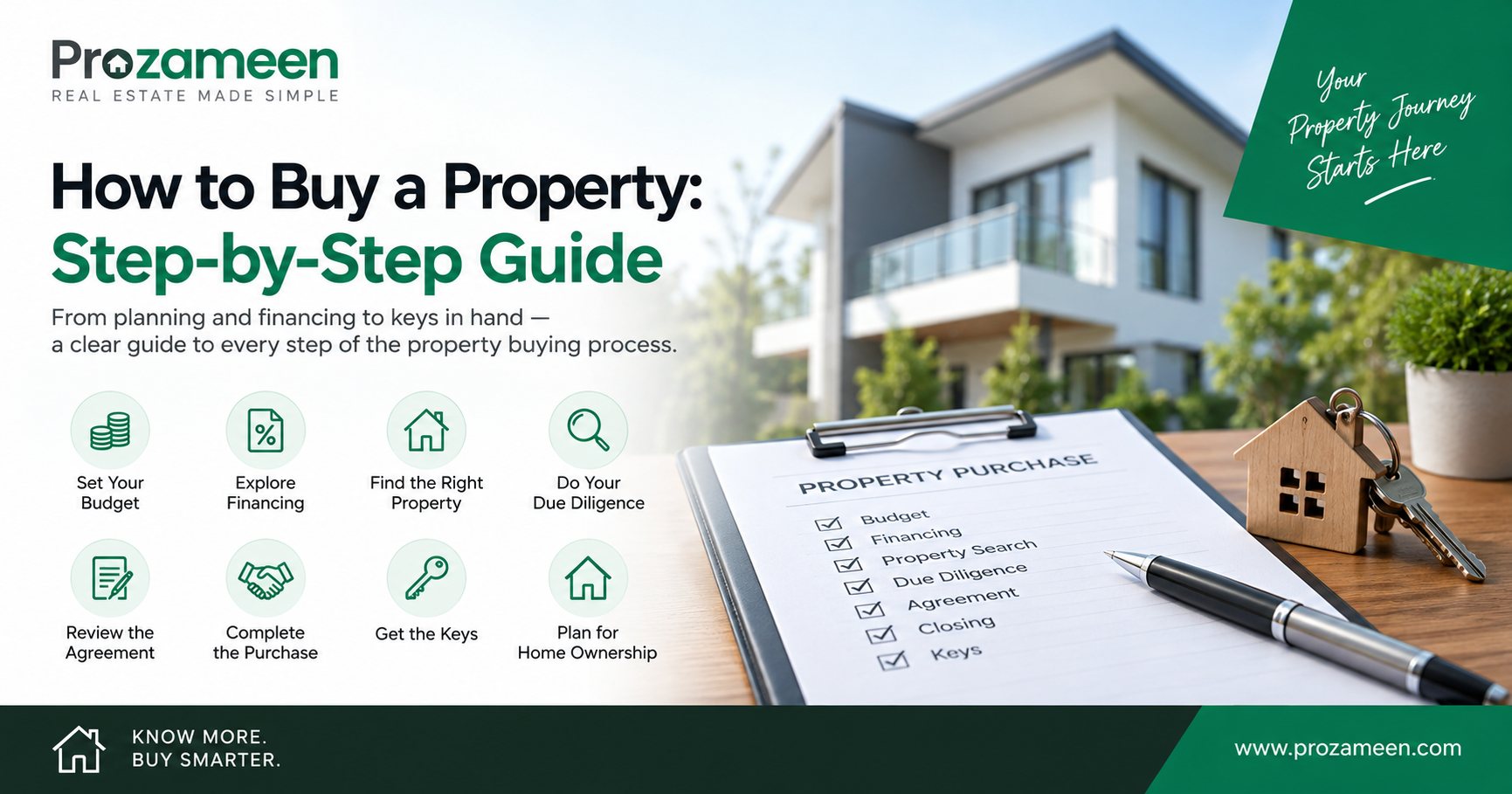
How to Buy a Property: Step-by-Step Guide
Buying a property can be one of the largest financial decisions you make. Whether you are purchasing your first home, moving to a new property or buying for long-term ownership, understanding the process can help you make more informed decisions.
The Prozameen How to Buy a Property Guide explains the main stages of buying real estate, from preparing your finances to researching properties, completing due diligence and receiving the keys.
1. Understand Your Property Budget
Before searching for properties, determine how much you can realistically afford.
Consider your:
- Income
- Savings
- Existing financial commitments
- Down payment
- Expected mortgage payment
- Purchase-related costs
- Ongoing ownership expenses
The purchase price is only one part of the total cost of buying a property.
Depending on the country and transaction, you may also need to consider legal fees, registration costs, taxes, financing fees, insurance, moving expenses and renovation costs.
2. Review Your Financing Options
If you plan to use a mortgage or home loan, research your financing options before making an offer.
Compare factors such as:
- Interest rate
- Loan term
- Monthly payment
- Down payment requirement
- Fixed or variable rate
- Financing fees
- Repayment conditions
Where available, mortgage pre-approval may help you understand your potential borrowing range before you begin serious property negotiations.
3. Decide What Type of Property You Need
Create a clear picture of what you are looking for before starting your property search.
Consider:
- House or apartment
- Location
- Property size
- Number of bedrooms
- Number of bathrooms
- Parking
- Storage
- Outdoor space
- Public transport
- Schools and services
Separate your essential requirements from features that would simply be nice to have.
4. Research the Location
A property's location can have a major impact on everyday life and long-term ownership.
Research:
- Public transport
- Commuting time
- Shops and services
- Schools where relevant
- Parks and recreation
- Traffic and noise
- Nearby construction
- Future development
Where possible, visit the neighbourhood at different times of the day.
5. Compare Properties Carefully
Avoid evaluating a property based only on photographs or decoration.
Compare properties using practical factors such as:
- Asking price
- Property size
- Price per square meter
- Condition
- Layout
- Location
- Maintenance requirements
- Service charges
- Expected renovation costs
Comparing several properties can help you better understand what represents reasonable value within the local market.
6. Inspect the Property
During a property viewing, inspect the home carefully.
Pay attention to:
- Walls and ceilings
- Floors
- Windows and doors
- Plumbing
- Electricity
- Heating
- Ventilation
- Kitchen
- Bathrooms
- Storage
- Dampness or mould
- Visible damage
If there are concerns about the property's technical condition, consider using an appropriate qualified property inspector or specialist.
7. Complete Property Due Diligence
Property due diligence means checking important information before committing to the purchase.
Depending on the location and property type, this may include reviewing:
- Ownership information
- Property registration
- Purchase documents
- Building information
- Known defects
- Maintenance history
- Restrictions
- Service charges
- Planned building work
- Transaction costs
Do not rely only on information provided in marketing materials. Important information should be independently verified where appropriate.
8. Review the Purchase Agreement
Read the purchase agreement carefully before signing.
Make sure you understand:
- Purchase price
- Payment schedule
- Deposit requirements
- Included fixtures or appliances
- Important conditions
- Completion date
- Handover arrangements
Property contracts and legal requirements vary between countries, so qualified legal assistance may be appropriate.
9. Prepare for Closing
Before completing the purchase, confirm that the financial and administrative requirements are ready.
This may include:
- Final mortgage approval
- Purchase funds
- Legal documentation
- Insurance
- Registration requirements
- Transaction fees
- Closing date
- Handover date
Keep copies of important documents connected with the purchase.
10. Complete the Property Handover
At handover, inspect the property again before completing the process.
Confirm:
- Keys and access devices
- Property condition
- Included fixtures
- Utility meter readings
- Outstanding repairs
- Manuals and warranties
- Relevant property documents
Photograph visible defects or unresolved work where appropriate.
After Buying the Property
Property ownership continues after the purchase is completed.
Plan for ongoing expenses such as:
- Mortgage payments
- Insurance
- Property taxes where applicable
- Utilities
- Service charges
- Maintenance
- Repairs
- Future renovations
Keeping a financial reserve for unexpected property expenses can help with long-term ownership planning.
Important Information
Property-buying processes, mortgage requirements, taxes, registration procedures and legal obligations vary between countries and transactions.
Prozameen provides this guide for general informational and educational purposes only.
Where appropriate, consult qualified professionals before making significant property-related decisions.