
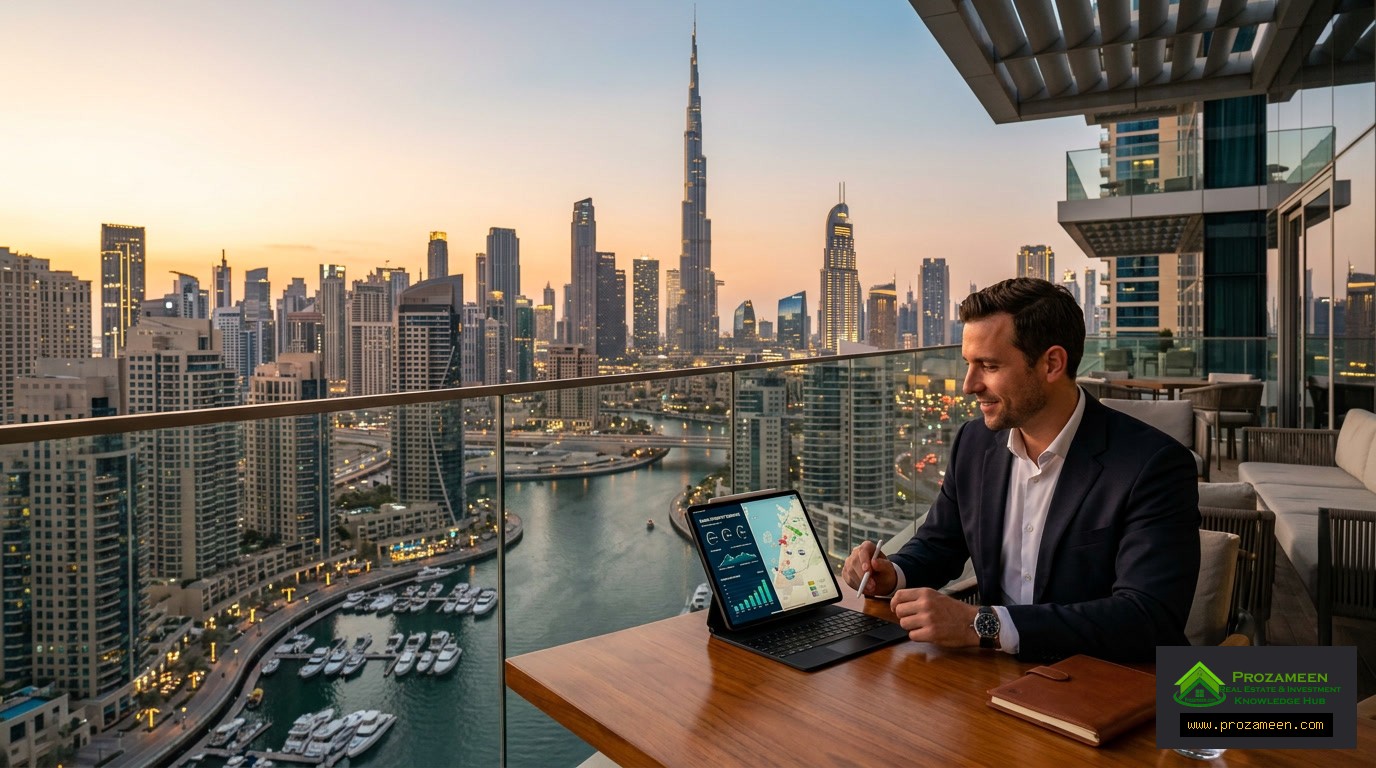
Dubai Real Estate Investment Guide 2026
Dubai Real Estate Investment Guide 2026: Best Areas, ROI, Risks & Expert Tips
Quick Answer: Is Dubai Real Estate a Good Investment in 2026?
Yes, Dubai remains an important real estate investment market in 2026, but investors should be selective rather than assuming every property will deliver strong returns.
Dubai continues to attract international buyers because of its global business position, population growth, tourism economy, infrastructure, diverse property market, and established real estate regulatory framework.
The market is also showing signs of normalization. CBRE reported more than 45,000 residential transactions worth AED 137 billion in Q1 2026, while its Q2 review said residential activity moderated as demand softened and new supply began easing pricing pressure. At the same time, Knight Frank reported record activity in Dubai's luxury residential segment during the first half of 2026.
Therefore, the strongest Dubai investment strategy in 2026 is not simply "buy anything and wait." Investors should focus on location, property quality, rental demand, developer reputation, total acquisition costs, financing, supply pipeline, and exit strategy.
Dubai has become one of the world's most recognizable real estate investment destinations.
Over the past two decades, the city has developed a property market that attracts investors from the Middle East, Europe, Asia, Africa, North America and other regions.
Dubai's appeal comes from a combination of factors:
- International business activity
- Tourism
- Population growth
- Modern infrastructure
- Residential development
- Luxury property demand
- Freehold investment areas
- International connectivity
- Growing commercial activity
However, Dubai's real estate market is not a single market.
A luxury villa on Palm Jumeirah, an apartment in Jumeirah Village Circle, an office in Business Bay and an off-plan apartment in Dubai South can have completely different investment characteristics.
That is why investors should analyze the specific property and location, rather than judging Dubai's entire market using one number.
This Dubai real estate investment guide explains how investors can evaluate opportunities in 2026, which areas deserve attention, how to calculate rental returns, what costs to consider, and which risks should not be ignored.
Dubai Real Estate Market in 2026
Dubai entered 2026 after a strong period of residential market activity.
Knight Frank reported that Dubai recorded 205,400 residential transactions in 2025, an 18% increase year over year, while the total value of transactions increased 25% to AED 544.2 billion.
The market has continued to attract international capital in 2026, particularly at the luxury end.
Knight Frank reported that 296 homes priced above US$10 million were sold during H1 2026, with total sales value reaching US$5.1 billion, up 14% from H1 2025.
At the same time, the broader residential market is becoming more selective.
CBRE's Q2 2026 review reported that Dubai's residential market moderated during the quarter, with softer demand, lower transaction activity and new supply beginning to reduce pricing pressure.
What does this mean for investors?
It means Dubai remains an attractive market, but property selection matters more than ever.
Investors should avoid assuming:
"Dubai property prices always rise."
A more realistic approach is:
"Dubai has strong long-term investment drivers, but individual properties can perform very differently."
Why Invest in Dubai Real Estate?
1. International Investor Demand
Dubai attracts property buyers from a wide range of countries.
International demand is supported by:
- Business migration
- Tourism
- Entrepreneurship
- Expatriate employment
- Wealth migration
- Luxury lifestyle demand
This creates a broad potential buyer and tenant base.
2. Strong Rental Market
Rental demand is one of the major reasons investors consider Dubai.
Demand comes from:
- Professionals
- Families
- International employees
- Students
- Entrepreneurs
- Tourists
However, rental performance varies significantly between communities.
A property with a high advertised rental yield may have:
- Higher vacancy risk
- Higher service charges
- Lower resale liquidity
- Greater competition from new buildings
Therefore, investors should calculate net rental yield, not just gross rental yield.
3. Modern Infrastructure
Dubai has invested heavily in infrastructure and connectivity.
Important infrastructure includes:
- Dubai Metro
- Major highways
- International airports
- Ports
- Business districts
- Tourism infrastructure
Infrastructure can influence property demand because accessibility affects where people choose to live and work.
4. Diverse Property Market
Dubai offers properties for different investment strategies.
Investors can consider:
- Studios
- Apartments
- Villas
- Townhouses
- Luxury residences
- Commercial properties
- Offices
- Retail units
- Hospitality-related properties
This makes it possible to create different investment strategies according to budget and risk tolerance.
5. International Business Hub
Dubai's business ecosystem supports property demand.
The city attracts:
- Multinational companies
- Entrepreneurs
- Startups
- Financial professionals
- Technology companies
- International investors
Business activity can support both residential and commercial property demand.
6. Luxury Real Estate Demand
Dubai has become a major global luxury property destination.
The strength of the luxury market has been particularly visible in 2026.
Knight Frank's H1 2026 data showed record sales of homes priced above US$10 million, demonstrating continued demand among ultra-high-net-worth buyers.
However, luxury property requires a substantially different investment strategy from affordable residential property.
Best Areas to Invest in Dubai in 2026
There is no single "best" area for every investor.
The right location depends on whether the goal is:
- Rental income
- Capital appreciation
- Luxury investment
- Short-term rental
- Long-term holding
- Personal use
The following areas are worth researching.
1. Dubai Marina
Dubai Marina is one of Dubai's best-known residential communities.
The area attracts:
- Professionals
- Expats
- Tourists
- International investors
Why Consider Dubai Marina?
Advantages can include:
- Waterfront location
- Strong tenant recognition
- Restaurants and entertainment
- Public transportation
- Established residential market
Dubai Marina can be suitable for investors targeting rental demand and lifestyle-oriented tenants.
Risk to Consider
Because Marina is an established market, investors should compare:
- Purchase price
- Service charges
- Building quality
- Rental income
- Future competing supply
2. Downtown Dubai
Downtown Dubai is one of the city's most prestigious locations.
It is associated with:
- Burj Khalifa
- Dubai Mall
- Luxury hotels
- Premium residences
- Business and tourism activity
Suitable For
Downtown may appeal to investors targeting:
- Premium residential properties
- Luxury rentals
- Short-term accommodation where permitted
- Long-term capital preservation
Important Consideration
Entry prices can be significantly higher than in emerging communities.
Investors should therefore calculate whether the premium location produces sufficient rental income relative to the purchase price.
3. Business Bay
Business Bay combines residential and commercial real estate.
The area attracts:
- Professionals
- Companies
- Entrepreneurs
- International residents
Investment Opportunities
Investors can explore:
- Apartments
- Offices
- Mixed-use properties
Business Bay may be particularly interesting for investors who want exposure to Dubai's business ecosystem.
4. Palm Jumeirah
Palm Jumeirah is one of Dubai's most recognizable luxury destinations.
The area includes:
- Luxury apartments
- Villas
- Waterfront properties
- Branded residences
Suitable For
Palm Jumeirah is generally more relevant to investors seeking:
- Luxury property
- Prestige assets
- High-end rental markets
- Long-term wealth preservation
Risk
Luxury property has a smaller potential buyer pool than mass-market residential property.
Therefore, investors should consider liquidity and exit strategy before buying.
5. Jumeirah Village Circle (JVC)
JVC has become a popular residential community offering a broader range of relatively accessible properties.
The area attracts:
- Families
- Young professionals
- Tenants seeking affordability
- Investors targeting rental demand
Why Consider JVC?
Potential advantages include:
- Diverse residential stock
- Established community
- Rental demand
- More accessible entry points than prime luxury areas
However, investors should compare individual buildings carefully because service charges, construction quality, amenities and rental performance can differ.
6. Dubai South
Dubai South is an emerging development area connected to major infrastructure and long-term development plans.
Investors considering emerging locations should focus on:
- Infrastructure
- Population growth
- Employment centers
- New developments
- Future supply
Emerging areas can offer growth opportunities, but they can also carry greater uncertainty than established communities.
7. Dubai Hills Estate
Dubai Hills Estate has become an important residential destination featuring:
- Apartments
- Villas
- Townhouses
- Green spaces
- Retail facilities
It may appeal to families and investors seeking a modern master-planned community.
8. Dubai Creek Harbour
Dubai Creek Harbour represents another major development area.
Investors should evaluate:
- Waterfront positioning
- Future infrastructure
- Developer track record
- Planned supply
- Rental demand
As with any emerging district, investors should distinguish between future promises and currently delivered infrastructure.
What Type of Dubai Property Should You Buy?
Studio Apartments
Studios can be attractive for investors with smaller budgets.
Potential advantages:
- Lower entry cost
- Large tenant pool
- Easier rental positioning
However, competition can be high.
One-Bedroom Apartments
One-bedroom apartments can offer a balance between:
- Purchase price
- Rental demand
- Tenant flexibility
They may appeal to professionals and couples.
Villas and Townhouses
Villas and townhouses generally require larger capital commitments.
They may be suitable for:
- Family rental demand
- Long-term investors
- Lifestyle buyers
Luxury Properties
Luxury properties can offer exposure to Dubai's high-net-worth market.
However, investors should understand that luxury real estate can be more sensitive to:
- Economic cycles
- International capital flows
- Buyer sentiment
- Liquidity
Off-Plan vs Ready Property in Dubai
One of the most important decisions for investors is whether to buy an off-plan or completed property.
Off-Plan Property
Off-plan means purchasing a property before completion.
Potential Advantages
- Developer payment plans
- Early-stage pricing opportunities
- New construction
- Modern amenities
- Potential capital appreciation
Risks
- Construction delays
- Developer risk
- Market changes
- Completion uncertainty
- Future supply competition
ProZameen's existing Dubai investment guide recommends checking the developer's track record, project registration, escrow arrangements and Sales Purchase Agreement before committing to an off-plan purchase.
Ready Property
A completed property allows investors to inspect the actual asset.
Potential Advantages
- Immediate occupancy
- Existing rental data
- Physical inspection
- More predictable rental assessment
Potential Disadvantages
- Higher upfront payment
- Older buildings may require maintenance
- Existing properties may have higher service charges
For beginners, comparing actual rental income from completed comparable properties can be particularly useful.
How to Calculate Dubai Property ROI
Investors should distinguish between gross rental yield and net rental yield.
Gross Rental Yield Formula
Gross rental yield can be calculated as:
Annual Rental Income ÷ Property Purchase Price × 100
Example
Suppose:
Property price = AED 1,000,000
Annual rent = AED 70,000
Gross rental yield:
AED 70,000 ÷ AED 1,000,000 × 100 = 7%
This is only an illustrative calculation and is not a prediction of Dubai market returns.
Net Rental Yield
Net yield provides a more realistic picture.
Investors should subtract expenses such as:
- Service charges
- Property management
- Maintenance
- Vacancy
- Insurance
- Financing costs
- Other operating expenses
For example, ProZameen's existing Dubai investment guide illustrates how a property producing AED 70,000 in annual rent can have a lower net yield after operating expenses.
The lesson is simple:
Do not judge an investment using gross rent alone.
Dubai Real Estate Investment Costs
Property investors should budget for more than the advertised purchase price.
Potential costs include:
- Dubai Land Department fees
- Registration charges
- Broker fees
- Mortgage costs
- Valuation fees
- Bank charges
- Property management
- Service charges
- Maintenance
- Insurance
- Furnishing
- Vacancy periods
ProZameen's existing Dubai investor guide notes that DLD fees, agent commissions, mortgage costs and service charges should be included in the investment calculation and verified because applicable costs can change.
Always confirm the latest applicable fees with the relevant authority or qualified professional before completing a transaction.
Freehold Property in Dubai
Foreign investors should understand the difference between property ownership structures.
In designated areas, foreign buyers can purchase freehold property.
Freehold ownership generally provides stronger ownership rights than a limited lease arrangement, but the exact legal position depends on the property and applicable regulations.
Before buying, investors should verify:
- Property title
- Ownership status
- Registration
- Development approvals
- Applicable restrictions
Dubai Real Estate Regulatory Due Diligence
Property investment should never be based solely on a sales presentation.
Before purchasing, investors should verify relevant documentation and regulatory information.
Important considerations include:
- Dubai Land Department registration
- Developer registration
- RERA-related requirements
- Escrow arrangements for applicable off-plan projects
- Title documentation
- Sales Purchase Agreement
- Property service charges
- Outstanding payments
ProZameen's existing Dubai investment guide similarly recommends verifying DLD registration, RERA records, developer history and project documentation.
How to Choose a Dubai Property for Rental Income
If your primary objective is rental income, ask these questions:
1. Who is the target tenant?
For example:
- Professionals
- Families
- Students
- Tourists
- Corporate tenants
2. What is the average rent for comparable units?
Compare similar:
- Buildings
- Unit sizes
- Furnishing
- Locations
3. How much competing supply is coming?
A large number of new units can affect future rental competition.
4. What are the service charges?
High service charges can significantly reduce net returns.
5. How easy is the property to resell?
Rental income is only one part of an investment strategy.
Dubai Short-Term Rental Investment
Short-term rental properties can potentially generate higher revenue during strong tourism periods, but they also require more active management.
Investors should consider:
- Licensing requirements
- Building/community rules
- Cleaning costs
- Management fees
- Seasonal demand
- Occupancy
- Platform fees
- Furnishing costs
Do not assume that every Dubai apartment can legally or practically operate as a short-term rental.
Verify current requirements before purchasing specifically for this strategy.
Dubai Real Estate Investment Risks in 2026
A professional investment guide should discuss both opportunities and risks.
1. Market Correction Risk
Property markets move in cycles.
After strong growth, prices may:
- Stabilize
- Correct
- Grow more slowly
CBRE's Q2 2026 review specifically reported moderation in Dubai's residential market as new supply increased and demand softened.
2. New Supply
Dubai continues to develop new residential communities.
Additional supply can create:
- More tenant choices
- Greater competition
- Pressure on rents
- Pressure on resale prices in some segments
Therefore, investors should examine the future supply pipeline around a property.
3. Off-Plan Development Risk
Off-plan investment involves risks related to:
- Construction
- Delivery
- Developer performance
- Market conditions
Investors should perform developer-level due diligence.
4. Financing Risk
Mortgage financing can increase returns when property values and rental income perform well, but it also increases financial obligations.
Investors should stress-test:
- Interest rates
- Vacancy
- Rental reductions
- Maintenance costs
5. Currency Risk
International investors may face currency fluctuations between:
- Their home currency
- UAE dirham
- Financing currency
Currency movements can affect the investor's actual return.
Is Dubai Better for Rental Income or Capital Appreciation?
There is no universal answer.
Rental-focused investors
May prefer:
- Established rental communities
- Smaller apartments
- Locations near employment centers
- Areas with strong tenant demand
Capital appreciation-focused investors
May consider:
- Prime locations
- Waterfront properties
- Scarce luxury assets
- High-quality developments
- Infrastructure-led growth areas
Balanced investors
May look for properties combining:
- Reasonable rental income
- Strong location
- Resale liquidity
- Long-term growth potential
10 Smart Tips for Investing in Dubai Real Estate in 2026
Tip 1: Define Your Investment Goal
Decide whether you want:
- Rental income
- Capital growth
- Personal use
- Portfolio diversification
Tip 2: Never Buy Based Only on a High ROI Advertisement
Ask how the advertised return was calculated.
Check:
- Gross or net yield
- Vacancy assumptions
- Service charges
- Management fees
- Purchase costs
Tip 3: Research the Developer
For off-plan projects, examine:
- Previous projects
- Delivery history
- Reputation
- Project registration
- Payment structure
Tip 4: Compare Multiple Properties
Never make a decision after seeing only one property.
Compare at least several similar properties in the same area.
Tip 5: Calculate Total Acquisition Cost
Do not use only the purchase price.
Include every relevant cost before calculating ROI.
Tip 6: Study Future Supply
Ask:
How many competing units are scheduled to enter this market?
This question can be as important as current rental demand.
Tip 7: Visit the Location
If possible, physically inspect:
- Building
- Community
- Transportation
- Nearby construction
- Amenities
- Traffic
Tip 8: Verify Everything Independently
Never rely solely on:
- Sales brochures
- Social media posts
- WhatsApp messages
- Verbal promises
Verify important information independently.
Tip 9: Have an Exit Strategy
Before buying, determine:
- When you might sell
- Who the likely buyer will be
- Expected selling costs
- Market liquidity
Tip 10: Think Long Term
Real estate should generally be approached with a realistic investment horizon.
Avoid making decisions solely because of short-term market excitement.
Dubai Real Estate Investment Checklist
Before purchasing a Dubai property, ask:
☐ What is my investment objective?
☐ Is the property freehold or another ownership structure?
☐ Is the property properly registered?
☐ Is the developer reputable?
☐ What are the total purchase costs?
☐ What is the realistic rental income?
☐ What is the net rental yield?
☐ What are the annual service charges?
☐ How much competing supply is coming?
☐ What financing costs will I pay?
☐ Can I afford the property if rent falls?
☐ How liquid is the property?
☐ What is my exit strategy?
☐ Have I obtained independent legal advice?
Frequently Asked Questions About Dubai Real Estate Investment
Is Dubai real estate a good investment in 2026?
Dubai remains an important investment market in 2026, supported by international demand, infrastructure, business activity and a diversified property market. However, investors should be selective because the broader residential market is showing signs of moderation and additional supply is entering the market.
What is the best area to invest in Dubai in 2026?
There is no single best area for every investor. Dubai Marina, Downtown Dubai, Business Bay, Palm Jumeirah, JVC, Dubai Hills Estate and Dubai South can suit different strategies. The best location depends on budget, rental objectives, expected appreciation, property type and investment horizon.
How much money do I need to invest in Dubai real estate?
There is no single minimum amount that applies to every Dubai property investment. Prices vary significantly by location, property type, developer and project. Investors should also budget for transaction costs, financing, service charges, maintenance and other expenses.
Can foreigners invest in Dubai real estate?
Foreign investors can purchase property in designated areas under applicable UAE and Dubai regulations. The exact ownership structure and requirements should be verified for the specific property before purchase.
Is Dubai property good for rental income?
Dubai can offer rental-income opportunities because of demand from residents, professionals and tourists. However, rental performance varies by location, property type, building quality, purchase price and operating costs.
Is off-plan property a good investment in Dubai?
Off-plan property can offer potential advantages such as developer payment plans and access to new developments, but it also carries construction, delivery, developer and market risks. Investors should conduct detailed due diligence before committing.
Which is better in Dubai: apartment or villa?
Apartments can offer a lower entry price and potentially broader rental demand, while villas can appeal to families and lifestyle-oriented tenants. The better choice depends on investment objectives, location, budget and expected rental performance.
How do I calculate Dubai property ROI?
Start with gross rental yield by dividing annual rental income by the purchase price. Then calculate a more realistic net return by accounting for service charges, management, maintenance, vacancy, financing and other costs.
Is Dubai real estate risky?
Yes. Like every property market, Dubai real estate carries risks. These include market cycles, new supply, financing costs, developer risk, regulatory changes, vacancy and liquidity risk. Proper due diligence can help investors manage these risks.
Final Verdict: Should You Invest in Dubai Real Estate in 2026?
Dubai remains a compelling global real estate market in 2026, but the investment case has become more nuanced.
The strongest opportunity is not necessarily the property with the highest advertised return. Instead, investors should look for a combination of:
Strong location + genuine demand + realistic pricing + manageable costs + quality property + credible developer + clear exit strategy.
Dubai's luxury segment remains exceptionally strong, while the broader residential market is showing signs of moderation as new supply enters the market.
That combination makes selectivity more important for investors in 2026.
If you are considering Dubai property, conduct independent research, compare multiple properties, calculate net—not just gross—returns, and verify all legal and financial information before committing capital.
Explore More ProZameen Investment Resources
Continue your real estate research with ProZameen:
Real Estate Investment Guides:
ProZameen Investment Guides
Invest in Dubai Property – Complete Investor Guide:
Dubai Property Investor Guide
Top Areas to Buy Property in Dubai:
Dubai Property Investment Areas
Top Real Estate Investment Tips for 2026:
ProZameen Investment Tips 2026
Global Real Estate Trends 2026:
Global Real Estate Trends 2026
Investment Disclaimer:
The information provided in this article is for general educational and informational purposes only. It does not constitute financial, investment, legal, tax, real estate or other professional advice.
Real estate investment involves risk. Property prices, rental income, yields, regulations, taxes, financing costs and market conditions can change. Past market performance does not guarantee future results.
Any examples of rental yields, ROI or investment returns in this article are illustrative and should not be interpreted as guaranteed or expected returns.
Foreign investors should independently verify property ownership rules, registration requirements, taxes, fees, financing conditions and other applicable regulations before making an investment.
ProZameen is an independent real estate and investment information platform. It does not act as a real estate broker, agent or intermediary and does not participate in negotiations, transactions or deal closures. Users should independently verify property listings, developers, agents, sellers and all related information.
Before making a significant investment decision, consult appropriately qualified legal, tax, financial and real estate professionals.
About ProZameen
ProZameen is a global real estate and investment information platform providing market insights, investment guides, business news and property-related information.
ProZameen also provides free global property promotion for dealers, agents, consultants and developers. The platform does not act as a broker or intermediary. you can visit www.prozameen.com


